
For a growing food brand, the hardest jump is rarely the recipe — it is the volume. Somewhere between a commercial kitchen and a national retail listing, most Canadian producers hit a wall made of equipment, certification, and packaging they cannot realistically build themselves. That is the moment a co-packing partner enters the picture, and the choice you make there shapes cost, quality, and shelf presence for years afterward.
What a co-packer actually does
“Co-packer” is shorthand for contract packager, though the label undersells the role. A modern co-packing partner may blend and season, portion and fill, stuff and net, seal and label, hold inventory, and assemble the documentation a retail or food-service buyer expects. Some operate a single line built around one product format. Others take in raw ingredients at the dock and hand back a palletized, retail-ready case.
The practical difference for a brand owner is where the overhead sits. Instead of financing plant space, stainless steel, and a full quality-assurance program, you buy production time and expertise as you need it. Working capital stays in inventory and marketing rather than in equipment that runs two days a week.
Food safety comes first, not last
Before you compare quotes, verify the plant’s food safety credentials — because you inherit them. In Canada, that means a facility operating under the Safe Food for Canadians Regulations with a documented, preventive-control approach to hazards. A serious partner will hand this over without hesitation:
- Licensing — a valid SFCR licence covering the specific activities your product requires, not a general one.
- Preventive control plan — written, current, and genuinely specific to your product category.
- Third-party audits — a GFSI-recognized scheme such as BRCGS or SQF, plus the most recent scores and corrective actions.
- Allergen control — documented segregation, changeover, and cleaning validation between runs.
- Traceability — lot coding that traces a single finished case back to the raw ingredient receipt.
Capacity, minimums, and room to grow
Every co-packer has a batch size where the economics work. Below it, changeovers and cleandowns eat the margin. Above it, your run competes for line time with larger accounts. Matching that window to a realistic forecast — not an optimistic one — is the single best predictor of a smooth relationship.
Minimum run size
Ask for the true minimum in kilograms and in finished cases, then ask what a below-minimum run costs per unit. The gap between those numbers tells you how much forecasting discipline the partnership will demand.
Lead time and scheduling
Find out how far ahead the line is booked and what actually happens when a retailer pulls a promotion forward by three weeks. Flexibility is easy to promise and hard to deliver.
Headroom for growth
A partner who can absorb double your current volume without requalifying the product or moving you to a different plant saves months of work at exactly the moment you can least afford the delay.
Ingredients and blending under one roof
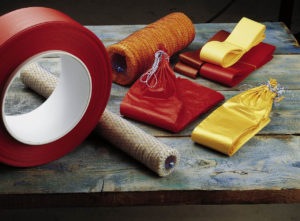
The most underrated advantage of a well-equipped co-packer is ingredient depth. A partner that already sources raw spices, seasonings, binders, phosphates, casings, and packaging can specify and buy those inputs at scale, store them under the right conditions, and blend them to your formula. Each supplier you remove from the chain is one fewer place for a substitution, a delay, or a specification drift to appear.
It also shortens development considerably. When custom blending happens in the same building as production, a reformulation becomes a bench sample and a short trial run — not a six-week loop of samples shipped between three companies in two provinces.
Looking for a co-packing partner in Canada?
MMIS handles custom blending, packaging, and contract production from a single facility in Ontario.
Questions to ask before you sign
Contracts differ, but a handful of direct questions tends to surface the real fit faster than a plant tour does:
- Who owns the formula? Get it in writing that your recipe, specifications, and any blend developed on your behalf remain yours.
- How is yield loss handled? Agree in advance on acceptable give-away and waste, and on who absorbs the cost when a run misses the target.
- What is the retention policy? Confirm how long samples and production records are kept, and how quickly you can get them.
- How are ingredient price changes passed through? Commodity spice and packaging costs move; the mechanism for adjusting should be defined, not improvised.
- What are the exit terms? Notice periods, tooling ownership, and finished-goods obligations matter most on the day the relationship ends.
The bottom line
Choosing a co-packer is less a procurement decision than an operational partnership. The cheapest quote rarely wins over three years, because line time, ingredient sourcing, documentation, and responsiveness all compound. Producers who evaluate certification first, capacity second, and price third generally spend less time firefighting and more time selling — which is, after all, the reason to outsource production in the first place.
Frequently asked questions
What is the difference between a co-packer and a contract manufacturer?
The terms overlap heavily in the food industry. A co-packer traditionally fills and packages a product to your specification, while a contract manufacturer may also formulate and produce it. Many Canadian facilities, including full-service co-packers, do both — blending ingredients and packaging the finished goods on the same site.
At what volume does co-packing make sense?
Usually when demand outgrows your own production window or when a retailer requires certification and packaging formats you cannot produce in-house. There is no universal threshold, but if equipment purchases or a QA program are the only things standing between you and a listing, co-packing is worth costing out.
Will a co-packer keep my recipe confidential?
A reputable one will, backed by a signed non-disclosure agreement and a contract clause confirming that the formula remains your intellectual property. Ask how formulas are stored and who on the plant floor can access them — the answer is telling.
This article represents is a guest opinion piece and doesn’t necessarily coincide with the positions of the company. For more information about our company’s stance, please get in touch with us directly.
 MMIS Mondo


 MMIS Mondo